
Travis had driven the same route to work for three years without a single problem. So when his car jerked left at a stop sign on an ordinary Tuesday morning, he almost convinced himself he’d imagined it. He hadn’t. Two blocks later, at the next light, it happened again, sharper this time, enough that his hands tightened on the wheel and the driver behind him laid on the horn. He sat there for a second with his foot still on the brake pedal, replaying it. By the time he pulled into his driveway that evening, Travis wasn’t wondering if something was wrong with his brakes anymore. He was wondering how fast he could get it fixed.
How Travis Noticed Something Was Wrong
What made it unsettling wasn’t just the pull itself. It was how ordinary the moment had been right before it. No warning light. No strange noise. No hint from the dashboard that anything had changed. Just a car that used to stop in a straight line, and suddenly wasn’t doing that anymore.
Travis ran through the usual explanations in his head. A low tire. A wet road. His own imagination getting ahead of him. He ruled each one out on the drive home, testing it at every stop sign along the way. The pull only happened when he braked, and it happened every single time he braked. That pattern was the thing that told him this wasn’t nothing.
He thought about waiting until the weekend. Then he thought about his daughter, who he picked up from daycare every afternoon in that same car, and he picked up the phone instead.
Getting Help Fast: The First Call
Travis called around that evening and reached Eric, a customer care specialist who fields calls like this every day. Instead of rushing him off the phone with a generic appointment slot, Eric slowed the conversation down and asked the questions that actually mattered. When does the pull happen? Only under braking, or all the time? Does the pedal feel soft, hard, or normal underfoot?
Travis’s answers, pull only when braking, pedal feeling otherwise fine, told Eric this was very likely mechanical, not a tire problem and not an alignment issue. A directional pull that only shows up under braking is treated as a safety critical symptom, so Eric moved Travis into a priority slot for the next morning instead of the standard queue.
Travis remembers being surprised by that part. Nobody had tried to sell him anything yet. Somebody had just listened.
What Was Really Going On Under the Hood
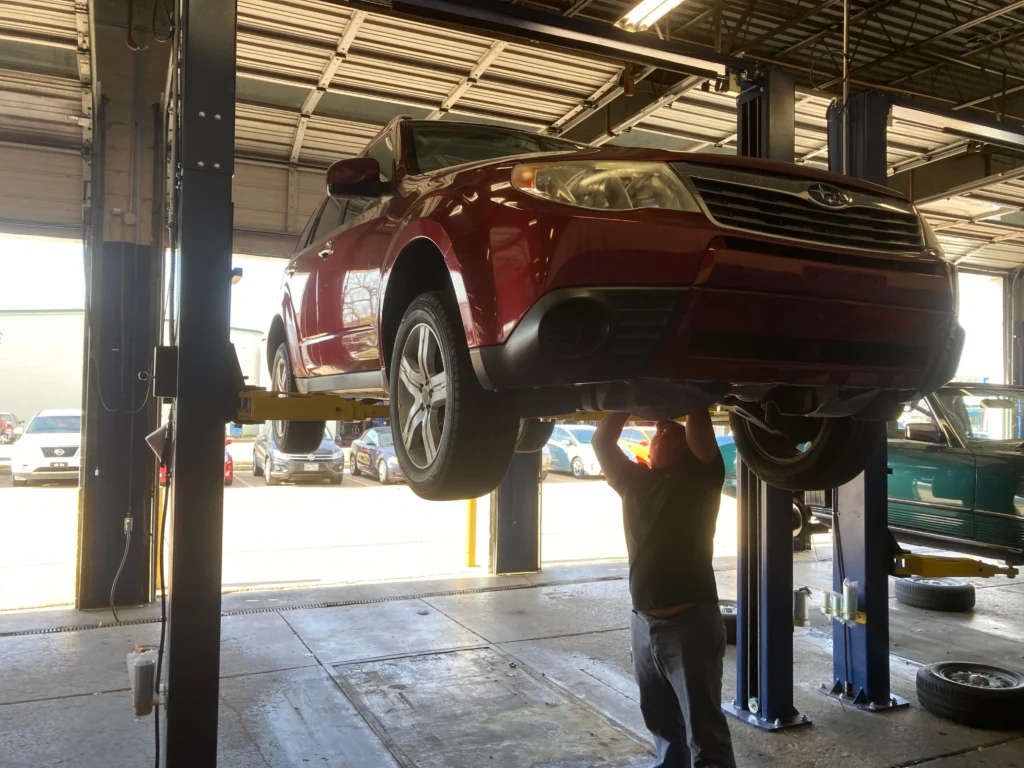
The next morning, ASE certified technician David put Travis’s car on the lift and pulled both front wheels for a full side by side comparison. That’s really the only honest way to catch a problem like this. You cannot diagnose uneven braking by looking at one side of the car alone, so David worked methodically, checking pads, rotors, hoses, and caliper movement on both sides before drawing any conclusions.
What he found explained everything. A caliper piston on one side had seized partway, so it was not releasing fully after each stop. That side was dragging slightly and running hotter than it should, while the opposite caliper worked exactly as it was supposed to. The mismatch in clamping force between the two sides was pulling the car sideways every single time Travis touched the brake pedal. Uneven wear on the pads confirmed the same story from a different angle.
David walked Travis through it using the actual parts in front of him, not just a written estimate. Travis said later that seeing the seized piston up close made the whole thing click for him in a way a phone explanation never could have.
Fixing It Right, Not Just Fast
Once the cause was confirmed, the repair followed a clear sequence, and David explained each step before starting it.
- Replace the seized caliper assembly on the affected side
- Resurface both front rotors to remove heat glaze and restore an even braking surface
- Install new ceramic brake pads on both sides, not only the damaged one
- Flush and bleed the entire hydraulic brake line to clear out contaminated fluid and trapped air
That last step is the one people underestimate most. Old brake fluid absorbs moisture over time, and trapped air in the lines is exactly what makes a pedal feel soft or spongy even after every mechanical part has been replaced correctly. Skip that step, and the same complaint tends to come back within a few weeks, just quieter and harder to trace.
This thorough, step-by-step approach is what sets a trusted Brake Repair Service in Webster, Texas apart from a rushed pad replacement. Instead of simply swapping worn pads, a proper brake service identifies and addresses the full braking system inspecting rotors, calipers, brake fluid, hardware, and other critical components to ensure reliable stopping performance, safety, and long-term peace of mind.
Making Sure It Actually Worked
David didn’t call the job finished the moment the wheels went back on. He bled the lines a second time to confirm there was no lingering air anywhere in the system, then took the car out himself on local Webster roads for a real world test. Light stops near the shop. Harder stops on the main road. A few rounds of stop and go traffic to see how it behaved under pressure, not just in a quiet lot.
No pull. No drift. A firm, even pedal every single time he touched it. That is the actual measure of whether a brake repair worked, not what gets written on an invoice.
Travis picked up his car that same afternoon and drove his daughter home from daycare a few hours later, brakes working the way they were always supposed to.
Frequently Asked Questions
Question 1: Why does my car pull to one side only when I brake?
Answer 1: It usually means one side of the braking system is applying more stopping force than the other. A stuck caliper piston, uneven pad wear, or a partially blocked brake hose are the most common causes, and they need a hands off wheel inspection to confirm which one is responsible.
Question 2: Is it safe to keep driving if my brakes pull to one side?
Answer 2: Not for long. A directional pull can turn into a real loss of control during a hard stop or on a wet road. It is worth getting checked by a certified technician before your next long drive, not after.
Question 3: How long does a caliper replacement and brake repair usually take?
Answer 3: A full job, including caliper replacement, rotor resurfacing, new pads, and a fluid bleed, typically takes about 1.5 to 3 hours, depending on how much the seized parts have affected the rest of the system.
Brake Problems Can’t Wait Get Expert Help in Webster, Texas
When your car starts pulling to one side, squeaking while braking, or taking longer to stop, it may be a sign of a brake problem that needs professional attention. At Bay Area Auto, we provide dependable brake repair services in Webster, Texas, with careful inspections and honest recommendations. Our technicians take the time to identify the cause of the issue and explain what your vehicle needs before beginning the repair. Don’t let a small braking concern turn into a bigger safety problem bring your vehicle to Bay Area Auto and get your brakes checked by experienced automotive professionals.
Schedule your brake inspection today and drive with greater confidence on every trip.
Click the “Book Now” button to schedule your Brake repair and auto repair service with Bay Area Auto today.
 Call us: +1 346-447-7171
 Visit Our Website : https://bayarea-auto.com/
 Address: 301 W Bay Area Blvd, Webster, TX 77598, United States
Our support team is available Monday through Saturday, 7:30 AM to 6:00 PM, to assist you quickly and efficiently.
Visit Bay Area Auto or WhatsApp us for a professional brake inspection and diagnostic service.