Alexis runs her own interior design practice near Webster, where her schedule revolves around client walkthroughs, vendor meetings, and site visits that rarely leave room for delays. When her car began jerking with every gear change, her first concern was practical: fitting a vehicle problem into a week already booked with appointments she couldn’t reschedule.
The issue surfaced on a Tuesday, during the short drive between a client consultation and a scheduled visit to a supplier showroom. It was immediately noticeable. Each gear change produced a hard, jarring lurch rather than a smooth transition.
When the Problem Could No Longer Be Ignored
She expected it might resolve on its own. It did not. By Thursday, the same lurch was occurring on nearly every shift, and the distraction was becoming difficult to ignore while she was driving between project sites.
At that point, she decided it was time to have the vehicle looked at professionally. She needed an accurate diagnosis and a shop that could accommodate a schedule built around client commitments.
Responsive Diagnostic Support for Urgent Concerns
Between appointments, she opened her browser and searched for a Transmission repair service near webster. Bay Area Auto came up with clear service details, hours, and reviews from other local drivers, which was enough for her to make the call directly rather than continuing to search.
She called and reached Eric, our customer care specialist, between appointments. A brief description of the symptoms was enough for him to understand the concern. He asked a few follow-up questions about frequency and any accompanying smell or noise, then scheduled her for a priority diagnostic appointment before her first client visit the following morning.
That kind of responsiveness matters. A vehicle jerking during gear changes should not be driven indefinitely, and a same-day or next-day appointment allows drivers to address the issue without disrupting
Quick Answer: A car that jerks or hesitates during gear changes is usually caused by degraded transmission fluid or a failing shift solenoid valve, both of which disrupt how gears engage. A proper digital diagnostic can pinpoint the exact cause, and most cases are resolved with a valve replacement and a full fluid flush. This is exactly the process Bay Area Auto followed for Alexis, and it’s the fastest path to an answer for anyone searching for the Best Auto Repair Shop Webster, Texas drivers trust for this kind of fix.
Diagnostic Inspection Reveals the Root Causes
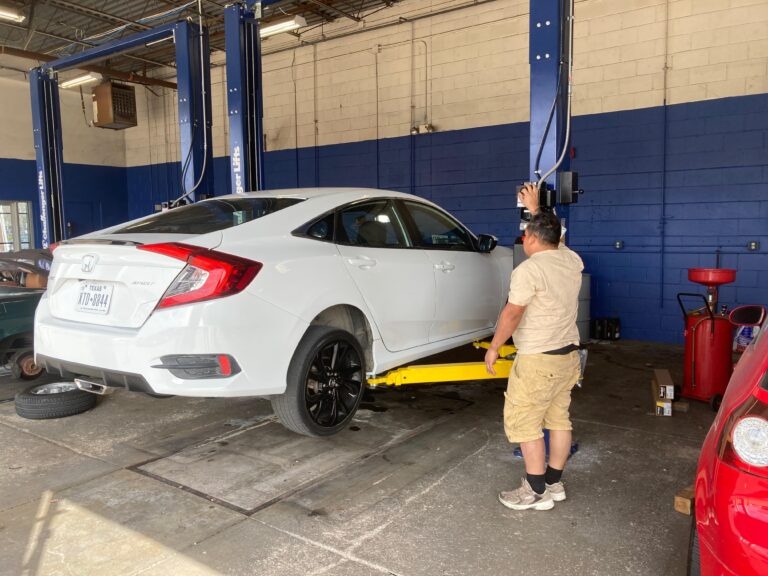
When Alexis arrived, lead technician David began with a full inspection paired with a digital diagnostic test. This step is essential, as jerking during gear changes can originate from several sources, including worn engine mounts, a failing torque converter, or an electrical sensor issue, in addition to the two most common causes: fluid condition and the solenoid.
In Alexis’s case, the diagnostic identified both. The transmission fluid had degraded well past its useful life, appearing thin and discolored rather than clean and reddish. In addition, the shift solenoid valve, the component responsible for controlling fluid flow and triggering each gear change, was beginning to fail and sending inconsistent signals through the system.
A Complete Repair Restores Smooth Shifting
Together, these two issues accounted for the rough shifting she had been experiencing. Degraded fluid alone can cause hesitation. A failing solenoid alone can cause jerking. In combination, they were working against each other with every gear change.
David replaced the faulty solenoid valve, then performed a complete transmission fluid flush and refilled the system with fresh fluid. This approach addresses both the mechanical trigger for the jerking and the fluid quality supporting the transmission overall, rather than resolving one symptom while leaving the other to resurface later.
A subsequent road test confirmed the repair. Gear changes were smooth and consistent, with no hesitation or lurching. Alexis retrieved her vehicle in time for her next client appointment, allowing her to remain on schedule. For drivers evaluating options for Transmission Repair Service Webster, Texas, this approach, diagnosing the issue thoroughly before performing the repair, is what distinguishes a lasting fix from a temporary one.
Signs You Shouldn't Ignore
Alexis’s experience reflects a fairly common pattern, and the warning signs typically appear before jerking becomes as pronounced as it did in her case.
It is worth scheduling an inspection if you notice:
- Jerking, hesitation, or delayed response when shifting gears
- A burning smell coming from under the hood
- Fluid that looks dark brown or smells burnt rather than reddish and clean
- Grinding or whining noises during gear changes
- A check engine light paired with rough shifting
Habits That Extend Transmission Life
Routine attention to a few key habits can help drivers avoid the situation Alexis encountered in the middle of a busy project season:
- Have transmission fluid checked at the intervals recommended for your vehicle
- Avoid shifting from reverse to drive while the car is still moving
- Let the engine warm up briefly in cold weather before driving hard
- Address dashboard warning lights early instead of waiting them out
- Schedule a diagnostic at the first sign of jerking or hesitation, not after it worsens
Frequently Asked Questions
Question : 1 Why does my car jerk when I shift gears?
Answer : 1 Jerking during gear changes is most often caused by low or degraded transmission fluid or a failing shift solenoid valve. Both interfere with how smoothly the transmission engages each gear, and a digital diagnostic test can confirm which one is responsible.
Question : 2 How much does transmission repair typically cost?
Answer : 2 Cost depends on what’s actually wrong. A fluid flush and solenoid valve replacement, like the repair described here, is generally far less expensive than a full transmission rebuild, which is another reason an early diagnostic matters.
Question : 3 How often should I get my transmission fluid changed?
Answer : 3 Most vehicles need a transmission fluid change every 30,000 to 60,000 miles, though this varies by make, model, and driving conditions. If you’re unsure of your vehicle’s interval, a quick check during a routine visit will confirm it.
Schedule Your Transmission Repair Service in Webster, Texas
If your vehicle is jerking, hesitating, or shifting roughly between gears, don’t wait for the problem to worsen. A professional diagnosis can identify the underlying cause and help prevent more costly transmission damage.
Click the “Book Now” button to schedule your transmission repair and auto repair service with Bay Area Auto today.
 Call us: +1 346-447-7171
 Visit Our Website : https://bayarea-auto.com/
 Address: 301 W Bay Area Blvd, Webster, TX 77598, United States
Our support team is available Monday through Saturday, 7:30 AM to 6:00 PM, to assist you quickly and efficiently.
Visit Bay Area Auto or WhatsApp us for a professional transmission inspection and diagnostic service.