Quick Answer: What Happens After Accident Damage
After a traffic accident, a good collision repair starts with a written estimate, continues with a teardown that often uncovers damage the first look could not see, and finishes with safety checks and a test drive. The first estimate is a starting point, not a final number. In Webster, Texas, Laura’s car took a hit to the front corner at an intersection. The team at Bay Area Auto wrote an initial estimate, then found a damaged radiator support and a shifted driver-assist camera once the bumper came off, and worked with her insurer to approve the added repairs before continuing. Explaining each step, and getting approval before extra work, is what a real Best Auto Repair Shop Webster, Texas drivers count on does after an accident.
When the Other Car Ran the Light
Laura works as a pharmacy technician in Webster, and her days start early. Most mornings she is on the road before the sun is fully up.
It happened at a four-way intersection she drives through every day. Her light was green. She had just started through when a car coming from her left pushed through its red light and struck the front corner of her car. The impact spun the front end sideways and stopped her car in the middle of the lane. The airbags did not go off, and she was not hurt, but her hands shook for a good ten minutes afterward.
A police officer arrived, took statements, and gave her a report number. The other driver admitted fault at the scene. Laura photographed everything: the damage, the road, the other car, the license plates, and the signal. Her car was drivable, barely, with a headlight hanging loose and a fender pushed into the tire.
By that evening, the adrenaline had worn off and the questions had started. How bad was the damage really? How does the insurance part work? Would the repair take weeks? She had never been through this before, and she wanted answers from someone who would explain it plainly.
A Call That Covered the Insurance Questions
Laura called the next morning and spoke with Eric on the customer care line.
Eric started with the basics. Was she safe? Had she been checked out by a doctor? Was the car driveable, or should she have it towed? Did she have the police report number, the other driver’s insurance information, and photos?
Laura explained that she had all of it, that she was sore but fine, and that she could drive the car carefully.
Then Eric answered the question she had not even known how to ask. He explained that the first step would be a written estimate based on what could be seen, that the estimate might change once the car was taken apart because damage often hides behind crushed panels, and that if it did change, the shop would send the added repairs to her insurance company for approval and keep her informed. He also let her know that in Texas she could choose where her car is repaired, and that he would help coordinate paperwork with the insurer either way.
He booked an estimate appointment for the following morning and asked her to bring the report number and insurance details.
Inspecting the Front End Piece by Piece
When Laura arrived, technician Adam walked around the car with her before writing anything down. He explained that he would look at what was visible first and then check what was not. He checked:
The bumper cover, headlight assembly, fender, and hood for damage and alignment
Gaps between panels on both sides, compared with each other
The radiator, A/C condenser, and fan area behind the bumper
Suspension and steering parts on the impact side
The camera and sensors that support driver-assist features
Warning lights and stored diagnostic codes
He measured the gaps between the hood and fender, took photos, and wrote a detailed estimate. Adam told Laura plainly that it was a good estimate based on what he could see, and that he expected to learn more once the front end was apart. He asked her to approve the teardown so the car could be fully inspected before parts were ordered.
What the Teardown Uncovered Beyond the Estimate
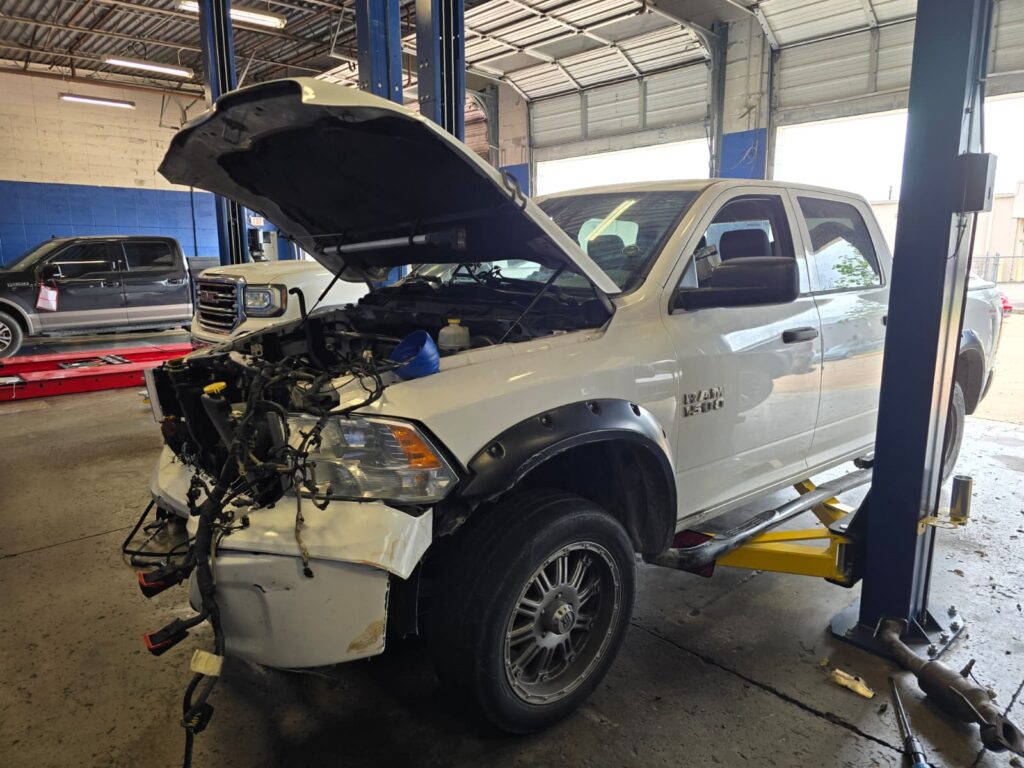
Once the bumper cover and fender came off, the full picture showed. As Adam had expected, the damage ran deeper than the surface.
The radiator support, the metal frame piece that holds the radiator, the headlights, and the front bumper reinforcement, had bent inward about an inch. That alone would have left the new bumper sitting wrong. The A/C condenser, which sits in front of the radiator, had a small crack and was leaking refrigerant. The camera mounted behind the windshield, which supports lane and braking assistance, had been jarred and no longer pointed where it should.
None of this was visible during the first estimate. Adam photographed each item, wrote up a supplement listing the added repairs, and sent it to the insurance company with the photos. Eric called Laura the same day and walked her through what had been found, why it mattered, and what was waiting on approval. Nothing extra was started until the insurer approved it.
That process is normal, and it is the reason the first number on an accident estimate is rarely the final one.
Completing the Repair and Final Checks
With the supplement approved, Adam repaired and realigned the radiator support using a frame measuring system, so every mounting point matched factory specifications. He replaced the leaking condenser, then installed the new bumper cover, headlight assembly, and fender.
Paint came next. The new fender and bumper cover were color-matched, and the paint was blended into the neighboring panels so the color carried evenly from hood to door.
Then came the checks that people tend to forget. Adam performed a wheel alignment, since an impact on the front corner can push suspension parts out of position. He recharged the A/C system and tested it. He recalibrated the windshield camera so the driver-assist features read the road correctly again, and cleared the stored fault codes.
The last step was a road test that included city driving and a highway stretch. Laura’s car tracked straight, the A/C blew cold, and no warning lights came on.
Accident repairs can feel overwhelming because there are so many moving parts. A real Best Auto Repair Shop Webster Texas trusts makes the process understandable, and handles the details people are not expected to know. Here is what a good repair process does:
Explains the estimate honestly : The first estimate reflects what can be seen. A good shop tells you upfront that it may change and why.
Inspects before ordering parts : A teardown shows what is hidden behind the damage, which prevents surprises in the middle of the repair.
Gets approval for added work : When a supplement is needed, the shop documents it, sends it to the insurer, and keeps the owner informed instead of working on assumptions.
Checks safety and comfort systems : Alignment, A/C, and driver-assist calibration are part of a complete repair, not extras.
Tests the finished car : A road test confirms the car drives straight, sounds right, and shows no warning lights before it goes back to its owner.
How the Repair Timeline Usually Works
People often ask how long a collision repair will take, and the honest answer is that it depends. Still, the stages are predictable.
First comes the estimate and inspection, usually done within a day or two of arriving. Next is the teardown and supplement, where hidden damage is documented and approvals are requested. That stage can take a few days, depending on how quickly the insurer responds. Then parts are ordered, and delivery time varies by vehicle and by whether parts are in local stock. After that comes the repair itself, followed by paint, which needs drying time between layers. The final stage is calibration, alignment, and testing.
A small repair may take a few days. A front-end repair like Laura’s takes longer, and parts availability is often the biggest variable. A good shop gives realistic updates instead of promising a date it cannot control, and will tell you when a delay comes from parts or approvals.
The estimated time for your own repair is best confirmed in writing at the start.
What To Do After a Traffic Accident
If you have been in an accident, a few steps protect you and make the repair process smoother:
Check that everyone is safe, and call for help if anyone is hurt
Photograph the scene, all vehicles, plates, and any damage before moving the cars if it is safe to do so
Exchange insurance and contact information, and get a police report number
Note any warning lights, unusual sounds, or changes in how the car drives
Report the accident to your insurer promptly
Ask for a full inspection, not only a quick estimate, so hidden damage is documented early
A car that still drives can still hide serious damage. The fact that it starts and moves does not mean it is safe or fully intact.
Once the damage is documented, a proper Collision Repair Service in Webster, Texas repairs the visible panels and the hidden parts behind them, checks alignment and safety systems, and confirms the finished work with a road test rather than a quick visual check.
Get Expert Collision Repair in Webster, Texas
Been in a car accident? Even minor collisions can cause hidden damage that affects your vehicle’s safety, handling, and performance. At Bay Area Auto our team provides thorough collision inspections, transparent repair estimates, and professional repairs, keeping you informed throughout the process. We explain our findings, discuss additional work before proceeding, and help restore your vehicle with confidence.
📞 Call us: +1 346-447-7171
🌐 Visit our website: https://bayarea-auto.com/
📍 Address : 301 W Bay Area Blvd Webster Texas 77598
Instagram :- https://www.instagram.com/bayareaautoofficial/
Youtube: https://www.youtube.com/@BayAreaAuto
You can also WhatsApp us or visit our shop for a professional collision damage assessment. Our team is available Monday through Saturday, 7:30 AM to 6:00 PM.
Schedule your collision inspection today and let Bay Area Auto help get you safely back on the road.