
Quick Answer
If you notice reddish fluid pooling under your car, it’s most likely transmission fluid, and you shouldn’t keep driving on it. Low transmission fluid strips away the hydraulic pressure your gears need, which can burn out internal clutches in a matter of miles. The fix usually comes down to one of a few culprits: a cracked pan gasket, a loose cooler line fitting, or a worn axle seal. Get the car to a shop that can pressure-test the system and pinpoint the exact source before it becomes a full transmission replacement Bay Area Auto in Webster, Texas handles this kind of diagnostic-first leak repair regularly.
A Fluid Spot on a Friday Morning Commute
It was an ordinary Friday morning. Michael, a dentist at a hospital in Webster, Texas, pulled off the highway on his way to his shift and noticed something odd on the pavement where his car had been parked minutes earlier — a small, reddish puddle.
He hadn’t hit anything. Nothing felt different behind the wheel. But the color caught his attention right away, because engine oil doesn’t look like that.
Most drivers have the same instinct in this moment: is this serious, or can it wait until after work? With a full schedule of patients ahead of him, Michael needed an answer fast, so he called the Best Auto Repair Shop Webster, Texas drivers turn to for exactly this kind of situation.
What the Colour and Smell of the Fluid Actually Tell You
Fresh transmission fluid is bright red or pink, with a faintly sweet smell. As it ages and picks up heat cycles, it darkens toward reddish-brown. Either way, it looks and smells nothing like engine oil, coolant, or brake fluid which makes it one of the easier leaks to identify just by looking at the driveway stain.
That distinction matters, because the fluid type points directly to the urgency of the problem.
Booking Eric’s Transmission Repair Appointment
Eric, the shop’s customer care specialist, picked up on the second ring.
Michael – Hey, I noticed fluid under my car this morning. It’s reddish, maybe a cup’s worth on the ground. I’m on my way to the hospital, is it okay to keep driving?
Eric – Let’s not risk it. Can you tell if it has a smell, kind of sweet? And has the car hesitated at all when you shift?
Michael – Yeah, actually, there was a slight delay pulling out of the parking lot this morning. I didn’t think much of it.
Eric – That lines up with what you’re describing under the car. I’d get it looked at today rather than tonight. Every mile on low transmission fluid is harder on the gears than it looks. Can you swing by after you drop off at the hospital?
Michael – That works. What should I expect when I get there?
Eric – We’ll run a dye test to find exactly where it’s leaking from, then walk you through what it needs before touching anything. No guessing on this one.
Eric booked Michael into a same-morning diagnostic slot. That kind of quick triage matters a transmission running low on fluid doesn’t fail gradually. It can lose hydraulic pressure and damage internal clutch packs within a short distance, which is why getting the car off the road quickly, rather than waiting a few days to “see how it goes,” is often what separates a routine gasket repair from a full transmission rebuild.
On the Lift With Samuel: Finding the Real Source of the Leak
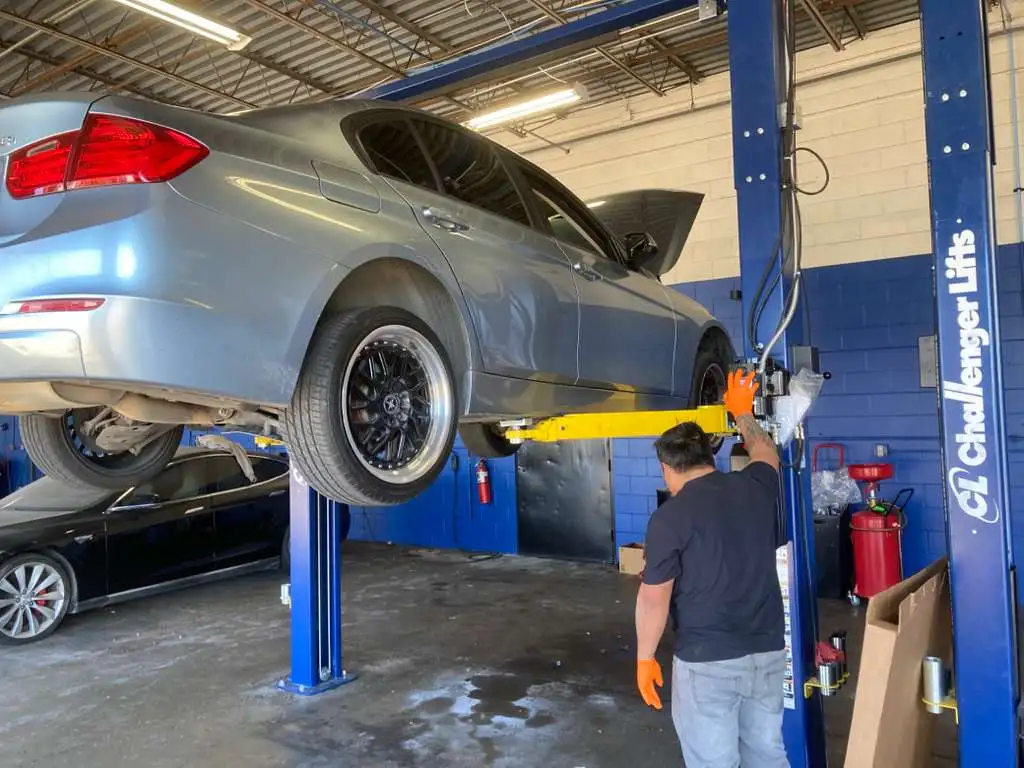
Once Michael’s car was up on the lift, ASE-certified technician Samuel got to work with a UV dye and pressure test adding a fluorescent dye to the fluid system, running the transmission, and checking the undercarriage under UV light to trace exactly where fluid was escaping under pressure.
Samuel – Found it. Your pan gasket’s cracked along the rear lip, and there’s a cooler line fitting that’s backed off a bit too. Probably vibration over time, not one single thing that happened.
Michael – So it’s not the transmission itself failing?
Samuel – No, these are two separate seal issues working together, which is why you saw more fluid than you’d expect from just one small leak. Good news is, this is a repair, not a rebuild.
Michael appreciated the plain explanation no jargon, just a clear picture of what was wrong and why.
What the Repair Involved
With the source confirmed, Samuel moved into the repair, which followed a fairly standard sequence for this type of failure:
- Draining the remaining transmission fluid
- Removing the pan and cleaning the mounting surface
- Installing a new, heat-resistant gasket
- Tightening and sealing the cooler line fitting
- Refilling the system with fresh synthetic transmission fluid
Michael was halfway to his hospital shift on a Friday morning when he spotted something reddish pooling under his car no warning light, no strange noise, just a stain that didn’t belong there. Transmission fluid leaks can come from worn seals, gaskets, cooler lines, or loose connections, and by the time you see one on the ground, the clock is already running. One call, a same-day diagnostic, and a dye test later, the source was found before it became a bigger problem.
Get professional Transmission Repair Service in Webster, Texas to identify the leak source and prevent further transmission problems before a small drip turns into a big repair bill.
Proving the Fix: Road Testing
A repair isn’t finished once the parts are back together. Samuel ran the transmission through a full thermal cycle on the lift to confirm the new seals held under real operating temperature, then took the car on an extended highway test drive around Webster to check gear shifts, acceleration, and fluid stability under load.
Samuel – Clean as it should be. No leaks, shifts are smooth, fluid level’s holding steady. You’re good to drive it normally again.
Michael – That’s a relief. I was picturing a much bigger repair when I saw that puddle this morning.
Samuel – Understandable. Most people assume the worst with transmission stuff. Catching it same-day is exactly why it stayed small.
Michael picked up his car after his hospital shift with complete peace of mind, and no more surprises on the driveway.
Selecting a Trusted Shop for Transmission Repairs
Not every shop runs a pressure test before quoting a repair. Look for a few specifics when a leak is involved:
- ASE-certified technicians who diagnose before they recommend parts
- Same-day or emergency scheduling for active fluid leaks
- Clear, upfront explanation of what’s actually failing and why, the way Eric and Samuel walked Michael through it
- A road test after the repair, not just a bay inspection
Bay Area Auto in Webster handles this kind of diagnostic-first repair regularly, which is part of why local drivers keep coming back for transmission and drivetrain work.
Preventing the Next Leak
Most transmission leaks don’t come out of nowhere. Gaskets harden with age and heat, cooler line fittings loosen with road vibration, and both tend to give small warning signs before they fail outright. A quick glance under the car every so often, especially after a long highway drive, catches these issues while they’re still a five-minute fix rather than a half-day repair.
Regular fluid checks help too. If the fluid on the dipstick looks unusually dark, smells burnt instead of faintly sweet, or the level keeps dropping between top-offs, that’s worth a diagnostic visit even without a visible puddle on the driveway.
What This Meant for Michael's Schedule
For Michael, the biggest concern wasn’t the repair cost or the parts involved — it was whether his car would be ready before his next hospital shift. Same-day diagnostics and same-day repair made that possible, which is often the deciding factor for drivers juggling work commitments around an unexpected car problem.
That’s the practical value of catching a leak early and working with a shop that can move fast: the fix stays simple, the down time stays short, and a Friday morning scare doesn’t turn into a lost week without a car.
Frequently Asked Questions
Question : 1 — What are the most common causes of transmission fluid leaks?
Answer : 1 — The usual suspects are a cracked or hardened transmission pan gasket, a loose or corroded cooler line fitting, and worn axle shaft seals where the drive axles meet the transmission casing. A loose drain plug is also a common, easily missed cause.
Question : 2 — Can I drive my car with a transmission fluid leak?
Answer : 2 — It’s not recommended. Low fluid means the transmission can’t build the hydraulic pressure it needs, which lets internal clutches slip and overheat. What starts as a seal repair can turn into a full transmission rebuild if you keep driving on it.
Question : 3 — How long does transmission fluid leak repair take?
Answer : 3 — A diagnostic leak check typically takes 45 to 60 minutes. If the fix is a pan gasket and cooler line repair with a fluid refill, most shops complete the full job within 2 to 4 hours.
Get Professional Transmission Repair Help in Webster, Texas
Noticing transmission fluid under your car? Don’t ignore the leak or wait for shifting problems to appear. A professional inspection can identify the source, assess the transmission’s condition, and help prevent a minor leak from becoming a costly repair. Contact Bay Area Auto for dependable transmission inspection and repair assistance in Webster, Texas.
 Call us: +1 346-447-7171
 Visit Our Website : https://bayarea-auto.com/
 Address: 301 W Bay Area Blvd, Webster, TX 77598, United States
Our support team is available Monday through Saturday, 7:30 AM to 6:00 PM to help you schedule service and get answers about your transmission concerns.